
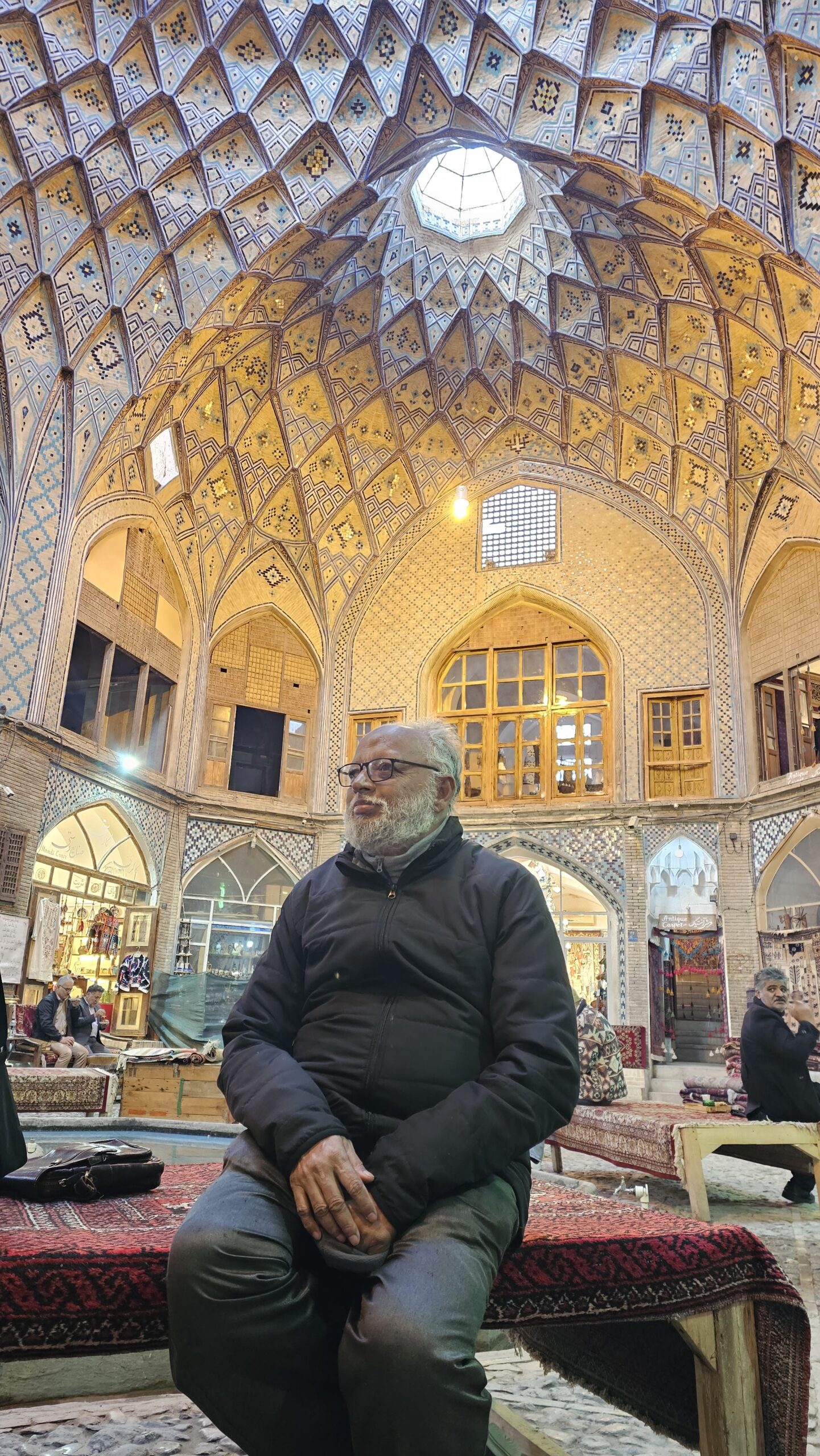
 The people exuded warmth and were immersed in their daily lives. The cleanliness of the surroundings and the symmetry of the streets reflected a sense of order.

The orange trees stand gracefully in streets, Apple trees without their leaves laden with the promise of spring. As we traveled through the verdant fields, we marveled at the lush agricultural landscapes that stretched across our sight. Due to Persistent international economic sanctions Iranians have ingeniously crafted their own cars and bikes, self-sufficient and resilient. These vehicles navigate the roads, carrying the spirit of innovation. Iran even has its own Pepsi and Coca-Cola. The streets echo with the hum of engines, a testament to their resourcefulness. Self-operating tolls proclaimed Iran’s technical prowess. In the bustling markets and serene gardens, young men and women converse effortlessly in multiple languages. French and English flow naturally, bridging cultures and creating connections. Even the Imams in the mosques speak French and English well.
Iran’s cultural heritage is steeped in history, and they have succeeded remarkably in preserving it. The remains of the Persian Empire’s golden age, which we study in history, welcome visitors to Persepolis. This ancient city, located 60 kilometers from Shiraz, served as the capital of the Achaemenid Empire, which thrived from 550 to 330 BC. Declared a UNESCO World Heritage Site, Persepolis allows us to witness the grandeur of the palace that once influenced the world’s course, through the aid of AI and VR cameras. The stunning columns, murals, and inscriptions transport us back to antiquity. Just 13 kilometers from Persepolis lies Naqsh-e Rustam, where great emperors, including Darius, are laid to rest. Another significant historical site is Pasargadae, the Achaemenid capital during the era of the great Cyrus, also a UNESCO World Heritage Site. Some historians believe that Cyrus is the same as Dhul-Qarnayn mentioned in the Quran.
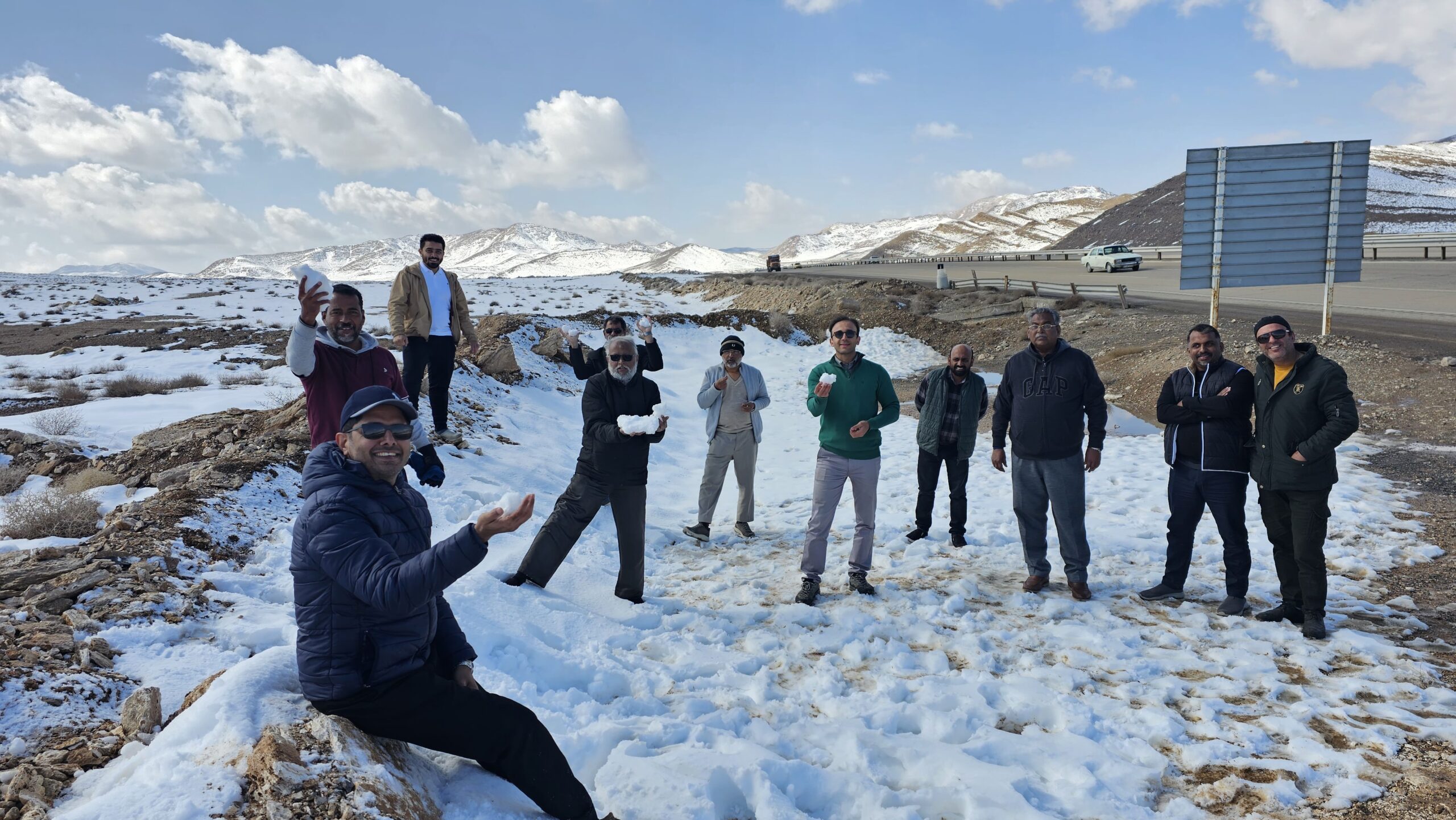 well as its gardens, irresistible fruits, and sweet delicacies. The daily diet in Iran includes a variety of breads, diverse rice dishes, and kebabs with different flavors. Dried fruits, nuts various seeds, fresh vegetables, fruit extracts, sherbets, and teas further enhance the diversity of Iranian cuisine. As we prepared for Nowruz, the New Year, we visited Tehran’s bustling Grand Bazaar and the serene village of Darband at the snowy foothills, a popular evening getaway. We marveled at the modern symbol of Iran, the Azadi Tower, built by the Pahlavis. With a heartfelt embrace, we thanked our guide Hamid for his companionship and bid farewell to Iran’s snowy mountains, carrying with us a handful of unforgettable memories.
Check out these captivating interviews featuring AK Abdul Majeed as he delves into the remarkable journey:


